

With the release of the 2025 Metro Vancouver Point-in-Time (PiT) Homelessness Count, Community First members of Council reaffirm their commitment to working with the province, community partners, residents and businesses to support unhoused residents and build long-term solutions.
The recently-released report of the 2025 PiT Count conducted in March showed region-wide homelessness increasing by 9%, while the increase in New Westminster was held to 7%.
| Sub-Region | 2023 Total | 2025 Total | 2023-2025 Change | |
| # | % | |||
| Delta | 44 | 75 | 31 | 70% |
| White Rock | 17 | 26 | 9 | 53% |
| Ridge Meadows | 135 | 183 | 50 | 38% |
| Vancouver | 2,420 | 2,715 | 295 | 12% |
| Richmond | 162 | 175 | 13 | 8% |
| New Westminster | 203 | 217 | 14 | 7% |
| Langley | 235 | 243 | 8 | 3% |
| Surrey | 1,060 | 1,078 | 18 | 2% |
| North Shore | 168 | 168 | 0 | 0% |
| Burnaby | 209 | 205 | -4 | -2% |
| Tri-Cities | 160 | 144 | -16 | -10% |
| Total | 4,813 | 5,229 | 411 | 9% |
“The numbers are complex, and show not just one or two factors impact local homelessness” said Mayor Patrick Johnstone. “While it is good news that we have seen a reduction in local sheltered but unhoused residents, our unsheltered population increased along with regional trends. This demonstrates the continued need for regional and provincial commitments to shelter space along with supportive and transitional housing.”
Photo: Mayor Patrick Johnstone and Point in Time Homeless Count volunteer Phil.
The PiT Count is the most accurate survey of homelessness in the Metro Vancouver region. While generally considered an undercount of the true number of unhoused and underused people, New Westminster’s count is generally more reliable as the City’s compact size makes it easier to count individuals and the City has strong connections with service providers who understand the local unhoused community. New west also has a strong PiT volunteer community, with many residents stepping up to volunteer including Community First members of Council.
“It's a humbling experience” said Councillor Ruby Campbell, “While asking the survey questions, I have a chance to hear how New Westminster residents fell into homelessness and about the journeys that people have taken. The building of trust with unhoused residents that happens a through their sharing of personal experiences reaffirms my commitment to invest in solutions.”
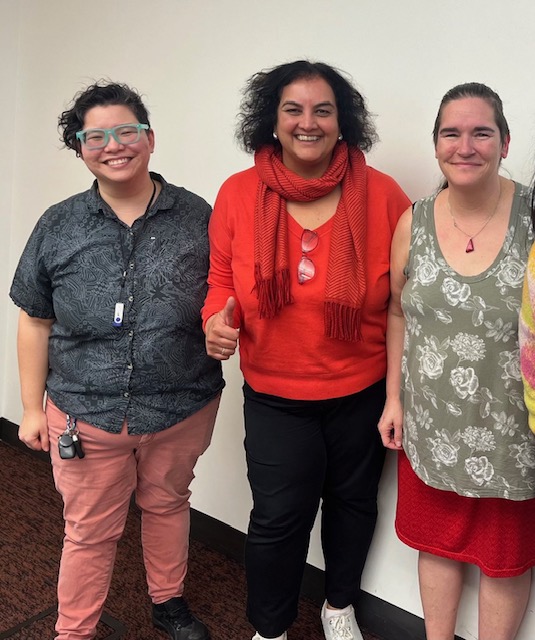
Photo: Councillor Ruby Campbell at Point in Time Homeless Count training day with Kent Chan-Kusalik, Homeless Count Project Administer and volunteer Briana Harris.
With New Westminster’s results below the regional increase, it reaffirms why Community First Mayor and Councillors continue to support the City’s Crisis Response Pilot Project that connects people with services they need. The need to partner with the province for longer-term solutions is at the heart of New Westminster’s investment in both a Five-Year Prevention, Support and Transition Services Plan and the Ten-Year Supportive Housing and Wrap-Around Services Plan.
“We have always been a City that supports its most vulnerable” said Councillor Jaimie McEvoy. “But the scale of this regional crisis can only be addressed by building transitional and supportive housing like we haven’t seen in decades”.
While those investments will take time to turn the tide on the regional homelessness crisis, the City of New Westminster is demonstrating leadership in reducing the suffering of residents in crisis, including those facing homelessness, mental health challenges, and substance use. This moves individuals away from emergency rooms and police custody, connecting them directly with outreach teams and supportive services.
"We're encouraged by the early signs that the Crisis Response Pilot Project is making a difference,” said Councillor Tasha Henderson, who also serves as the Chair of New Westminster Police Board. “The project is helping us respond to people with compassion rather than criminalization. When you hear that a community member is getting the consistent support they need to stabilize and feel empowered to find permanent housing after years of being on the street... Well, that's the goal. And it's happening."
While the City’s Advocacy team is working on longer term, sustainable strategies to address the three crises, including preventative, support and transition strategies, and permanent solutions, Community First members of Council will continue to call on Federal and Provincial partners to make deep and meaningful commitments to housing-first solutions that address root causes, not just symptoms to support New Westminster residents, businesses and community.